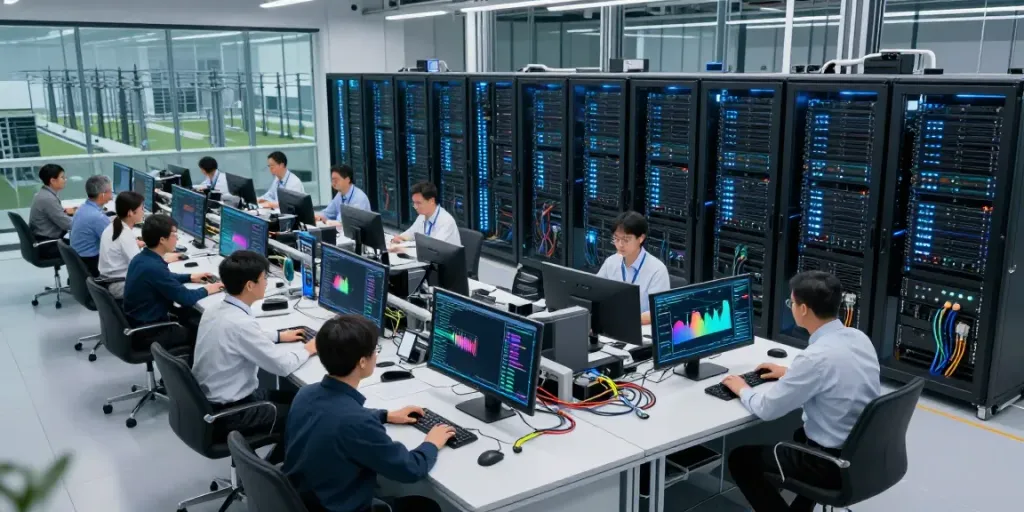
Understanding AI Data Centers
As the demand for artificial intelligence (AI) services continues to grow, the infrastructure supporting these operations evolves rapidly. AI data centers are specialized facilities that house the computing resources necessary for training, deploying, and delivering AI applications and services. These centers are distinct from traditional data centers, designed to cater specifically to the computational demands of AI technologies.
What is an AI Data Center?
An AI data center is engineered to handle the high-density workloads generated by artificial intelligence processes. While standard data centers primarily focus on data storage and general computations, AI data centers require advanced architectures, optimized for parallel processing using powerful GPUs (Graphics Processing Units). This helps them manage the unique computational needs of AI workloads, such as deep learning and complex model inference.
The Role of AI in Data Processing
AI systems rely heavily on data to learn and improve. The role of an AI data center is crucial in this regard as it fulfills the requirement for massive data processing capabilities. These centers utilize clusters of GPUs to perform calculations that are essential for training various AI models, transforming raw data into actionable insights.
Key Components of an AI Data Center
- High-Performance Computing Infrastructure: Central processing units (CPUs) and GPUs optimized for deep learning tasks.
- Storage Systems: Fast and scalable storage solutions to handle large datasets efficiently.
- Networking Capabilities: Robust networking to ensure high bandwidth and low latency between resources.
- Cooling Systems: Innovative cooling solutions to manage the significant heat generated by dense computing resources.
- Power Supply: Reliable energy sources with backup systems to ensure continuous operations.
Benefits of AI Data Centers
AI data centers offer various advantages that enhance the efficiency of AI-driven processes and applications. These benefits include enhanced computing power, scalability, and improved sustainability practices.
Enhanced Computing Power and Efficiency
AI data centers provide unparalleled processing capabilities, enabling organizations to run complex algorithms and large-scale computations swiftly. This efficiency leads to faster insights and improved performance in AI applications, ultimately driving business value.
Scalability for Future Demands
With the ever-increasing need for AI services, scalability is a fundamental aspect of AI data centers. They are designed to accommodate growing workloads without compromising on performance, allowing organizations to grow their AI capabilities in alignment with demand.
Environmental Impact and Sustainability
Modern AI data centers incorporate sustainable practices, such as using renewable energy sources and efficient cooling systems. By optimizing energy usage and investing in green infrastructure, these centers work towards minimizing their environmental footprint.
Challenges in Managing AI Data Centers
Despite their advantages, managing AI data centers comes with a set of challenges that need to be addressed effectively to ensure smooth operations.
Power Consumption and Energy Costs
AI data centers consume vast amounts of energy, especially when operating high-performance GPUs. Managing power consumption and reducing energy costs is critical for operators, as these factors directly impact operating margins.
Security Concerns in AI Operations
The integration of AI into data centers raises unique security challenges. Data integrity and protection from breaches must be prioritized to safeguard sensitive information and maintain trust in AI services.
Technical Skill Requirements for Management
Managing AI data centers requires specialized skills and expertise. Organizations may face difficulty in finding qualified personnel who can navigate the complexities of AI workloads, hardware management, and data operations.
Strategies for Optimizing AI Data Center Operations
To maximize efficiency and performance, operators should consider implementing several best practices in managing AI data center operations.
Best Practices for Energy Management
Establish energy management protocols that minimize waste and optimize performance. Techniques may include implementing real-time monitoring systems to track energy consumption and adjust resource allocations based on current workloads.
Integrating Advanced Cooling Solutions
Utilize innovative cooling technologies such as liquid cooling and air flow optimization to maintain optimal temperatures for equipment. These solutions can significantly reduce energy costs and improve the lifespan of hardware.
Monitoring and Maintenance Techniques
Regularly monitor performance metrics and conduct preventative maintenance to avoid potential downtimes. Establishing a proactive maintenance strategy can help in sustaining operational efficiency.
Future Trends in AI Data Centers
The landscape of AI data centers is continuously evolving, driven by technological advancements and increasing demand for AI capabilities. Here are some anticipated trends impacting the future of AI data centers.
Emerging Technologies and Innovations
As AI and machine learning technologies continue to mature, expect AI data centers to adopt cutting-edge innovations such as quantum computing and advanced AI management systems, which will redefine performance benchmarks in the industry.
The Evolution of AI Workloads
AI workloads are becoming more complex, leading to the need for data centers to adapt their architectures and processes accordingly. This will likely involve more specialized hardware and distributed computing strategies that enhance processing capabilities.
Predictions for AI Data Center Growth in 2026
It’s expected that AI data centers will experience significant growth by 2026 as businesses increasingly seek to leverage AI for competitive advantages. This expansion will necessitate innovations in infrastructure design, energy efficiency, and resource management.
What is the AI data center?
An AI data center is a cutting-edge facility that integrates advanced computing resources, storage solutions, and networking capabilities to support the demanding requirements of AI applications.
How do AI data centers differ from traditional data centers?
Unlike traditional data centers, which primarily focus on general computational tasks, AI data centers are optimized for high-density GPU processing and large-scale artificial intelligence workloads. This specialization allows for better performance in training and deploying AI models.
What are the environmental impacts of AI data centers?
AI data centers can have significant environmental impacts due to their high energy consumption. However, many are adopting sustainable practices that utilize renewable energy sources and implement energy-efficient technologies to mitigate these effects.
How to select the right AI data center provider?
Choosing the right AI data center provider involves evaluating factors such as infrastructure reliability, scalability options, energy efficiency practices, and the provider's commitment to security and compliance standards.
What skills are needed to work in an AI data center?
Working in an AI data center requires a range of skills, including expertise in cloud computing, data management, hardware maintenance, and familiarity with AI and machine learning technologies. Continuous education and training are essential to keep pace with evolving industry standards.